
Parent concern

Weak Maths foundations usually show up later than the actual gap

Weak foundations are not always obvious early on. A student can pass short tasks but struggle when fractions, algebra, diagrams, and reasoning have to work together at the same time.

Weak Maths foundations usually show up later than the actual gap
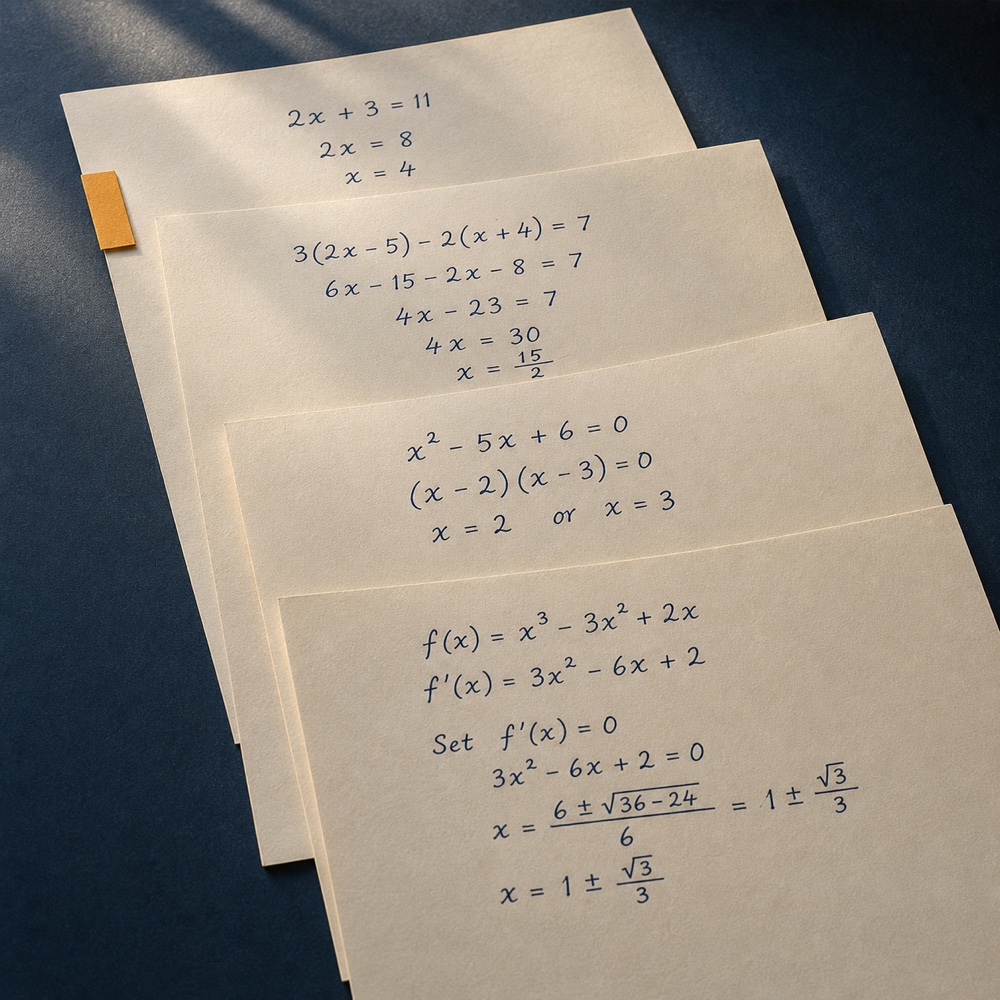
Concept visual for this parent concern
What the symptom usually means

The child may not be lazy or careless. They may be building new work on steps that were never stable enough.

A student with weak foundations can collect enough marks on easy questions to make school reports look fine. The gap only becomes visible when topics start combining: algebra inside geometry, fractions inside equations, word questions that need interpretation. For a year-level checklist of what to look for before the exam year, see how to spot a weak Maths foundation before the exam year.

Signs parents may notice

What it can look like at home

  • The same arithmetic or algebra mistake keeps coming back across different chapters.
  • Needs prompting before starting any question with letters in it.
  • Picks up marks on the easier parts of a test but falls apart when two topics connect.
What MathPert would check

The first check is diagnostic, not dramatic

  • Number fluency, fraction handling, algebra language, and whether working is laid out clearly enough to track.
  • Whether the student can explain why a step works, or is just copying a pattern.
  • Whether the mistakes point to a gap in knowledge, a shaky method, or a habit of skipping steps.
Matching class routes

Where this concern usually connects

Year 7 Maths

Weak foundations often surface in Year 7 when the first abstract topics arrive. The stage page explains what solid foundations look like at this level.

See Year 7 Maths

Year 8 Maths

Year 8 is where algebra starts to carry real weight. If the concern is showing here, the stage page covers the right starting point.

See Year 8 Maths

Year 9 pre-IGCSE

Year 9 is the last chance to close foundation gaps before the IGCSE pace begins. See the stage page for what to prioritise.

See Year 9 pre-IGCSE
Questions parents ask

Common questions

Some surface habits improve quickly once named. Deeper gaps take longer because the student has to relearn a step they thought they already knew. The earlier it is caught, the less there is to unlearn.

Related reading

More guides on this topic

How parents spot weak maths foundations

What to look for before the exam year, including the signs a foundation gap is hiding under passing class marks.

Read guide

Hidden maths gaps: a parent guide

How small gaps from earlier years quietly stack up by IGCSE, and what to do once you spot the pattern.

Read guide

Understands class but freezes in exams

Why a student who follows the lesson clearly can still stall on exam questions, and what the missing skill usually is.

Read guide
WhatsApp MathPert