Begin here
Which year level is your child in?
Each stage of the IGCSE syllabus leans on a different part of the foundation. Pick your child's year level and the check starts immediately.
free, takes 10 minutes, useful even if everything turns out fine
The part no one warns you about
It looks different at every year level. But it starts in the same place.
Year 7 - 8
"The marks look fine."
A 65 here, a 72 there. But the syllabus at this stage only tests whether your child can repeat a step, not whether they understood it. Gaps hide behind decent marks.
Year 9
"Suddenly they can't start questions."
Questions begin combining topics: fractions inside algebra, algebra inside graphs. The step they needed was half-learned two years ago, and nobody noticed.
Year 10
"Revision isn't moving the marks."
Exam pressure punishes every weak step at speed. Revision does not fix a gap it cannot see, it just moves faster over the same cracks.
Add Math
"Confident, then lost in 3 weeks."
Add Math assumes a fluency that was never confirmed. It is the harshest exposure of a foundation that was only ever assumed solid.
four symptoms. one root cause: nobody checked the foundation while it was still cheap to fix.
"She was getting B's, so I assumed everything was fine. Then in Year 9, she couldn't even start the questions. Not because she didn't study. The basics she needed were never solid. I wish I'd checked earlier instead of trusting the grades."
what we hear from parents, almost word for wordWhat you'll find out
Which topics are solid. Where the marks are being lost.
Your child answers 8 questions chosen for their year level. You get a plain answer to the question you actually have: is the foundation solid, and if not, where exactly is it leaking marks?
Foundation strength
Whether the core building blocks are actually solid, even when the answers look correct on the surface.
Working and method
IGCSE markers award marks for method, not just the final answer. A right answer with weak working is still losing marks.
Multi-step readiness
The question type where hidden gaps surface first, and where most students start losing marks they shouldn't.
Timing for their year level
What's coming next in the syllabus, and whether the foundation is ready to carry it.
After the diagnostic
We know exactly where your child is stuck. And you see the progress, not just hear about it.
Every gap Teacher Au finds in class goes into your child's Learning Graph. It stays there, named in plain words, until it closes. Once a month you get a card like this one, so you can see which steps are still open, which are improving, and which are gone.
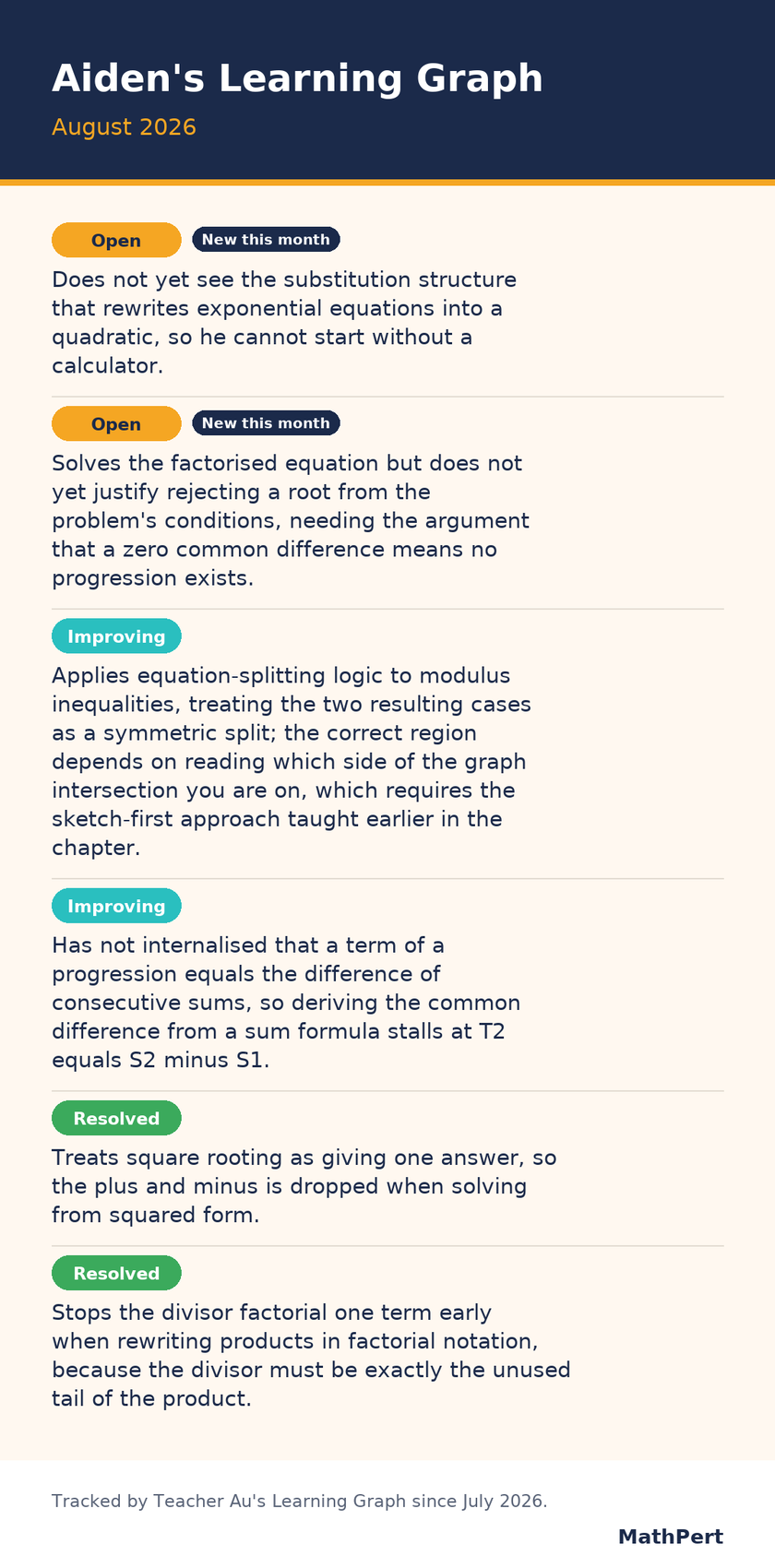
Sample card. Name and steps are illustrative, drawn from real class patterns.
Who's behind this
Not a tuition factory. A teacher who notices.
This diagnostic comes from Teacher Au, who runs small online IGCSE classes where every student has to think out loud and show their working. The questions test the exact steps he watches students stumble on in real lessons. If there's a gap, this is how it surfaces before an exam paper finds it.

Real messages, real screenshots
What parents send us after results day
No invented testimonials and no guaranteed marks. These are real anonymised messages from MathPert parents, screenshots included. Every one of them started where you are now: not sure what was actually going on underneath the marks.
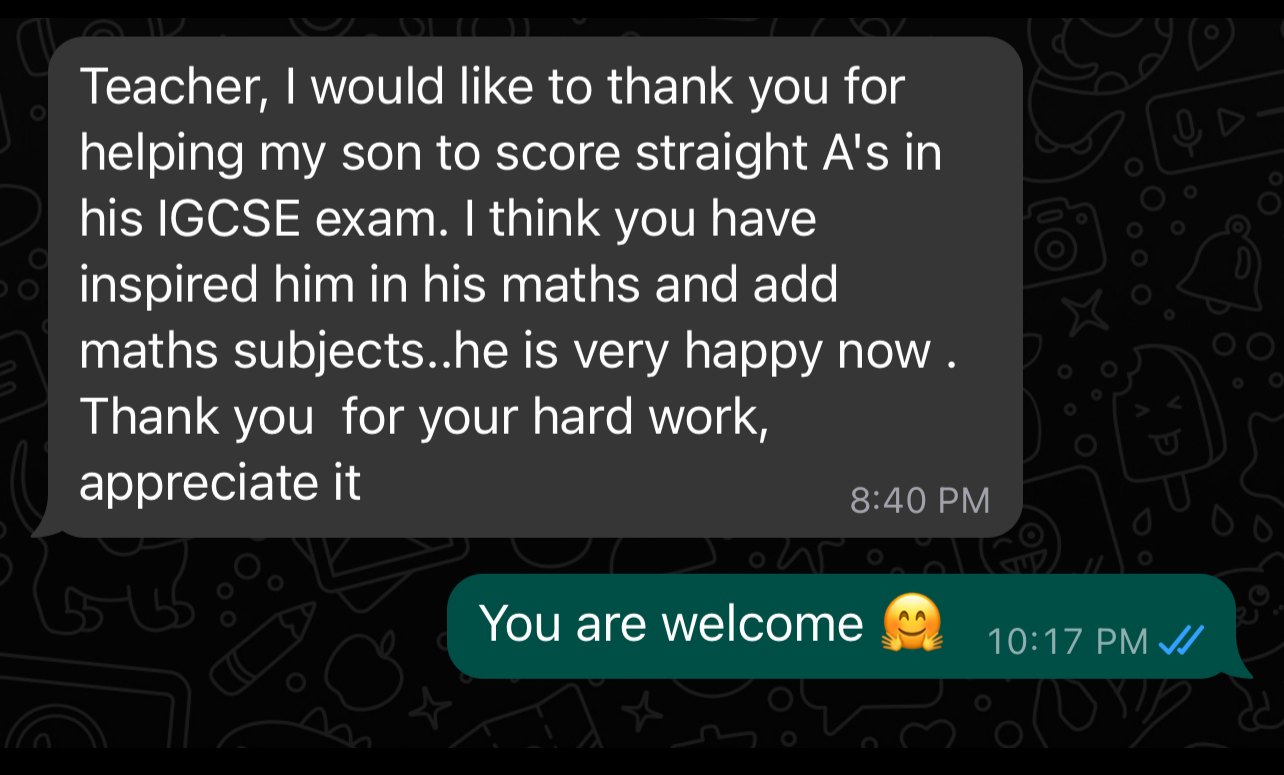
full privacy-safe screenshot shown

the student's name stays covered
it starts with knowing where the gaps are
Questions